You have a job offer in Sri Lanka, or your visa application asks for attested documents, and now you are looking at terms like "HRD attestation," "MEA," and "High Commission stamp" without a clear picture of where to start or how long it takes.
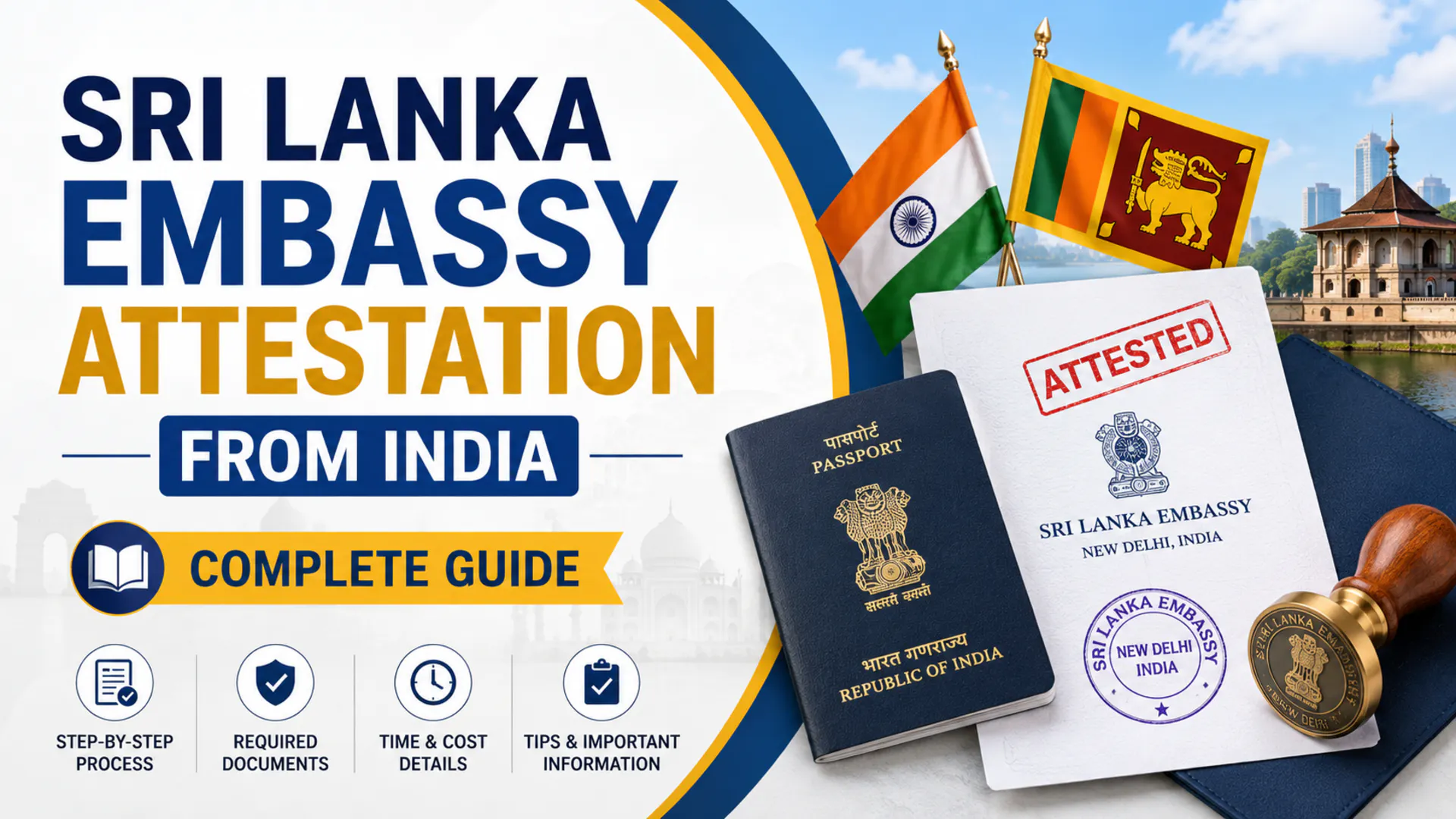
This guide explains the full Sri Lanka attestation process from India clearly. What it is, which documents need it, both routes available, the step-by-step chain, how long each step takes, and the mistakes that most people only discover after they have already wasted weeks.

What Is Sri Lanka Embassy Attestation and Why Is It Required?
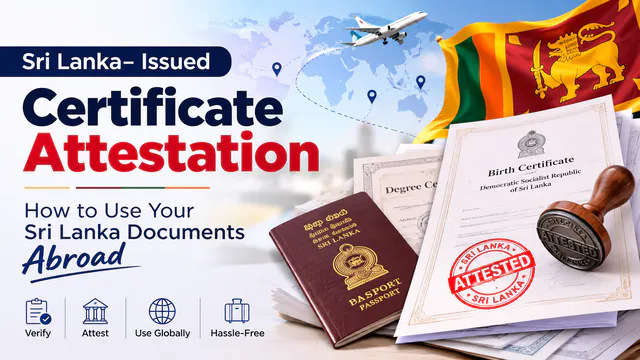
Sri Lanka embassy attestation is the official process of getting your Indian-issued documents verified and stamped by a chain of Indian and Sri Lankan authorities so they are legally accepted in Sri Lanka.
When you submit a degree certificate, a marriage certificate, or an experience letter in Sri Lanka for a job, visa, or education purpose, the Sri Lankan employer, university, or immigration authority has no direct way of knowing whether that document is genuine. Attestation solves this by creating a verified chain from the institution that originally issued your document all the way to the Sri Lanka High Commission in India, whose final stamp confirms the document's authenticity to Sri Lankan authorities.
Without attestation, your documents are not legally valid in Sri Lanka. Visa applications, employment contracts, and university admissions can all be rejected or delayed if your documents are not properly attested before submission.
Sri Lanka Is Not a Hague Convention Country — Why This Matters
This is a critical point that many people miss, especially those who have dealt with European country documentation before.
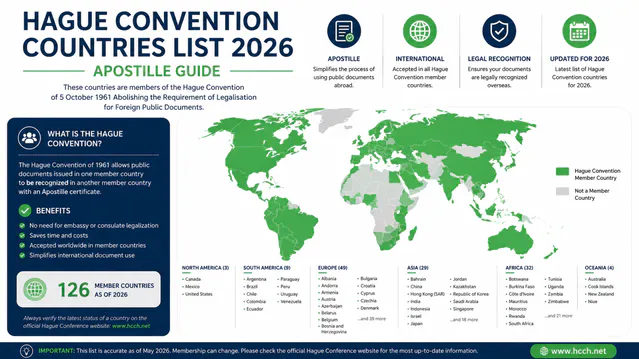
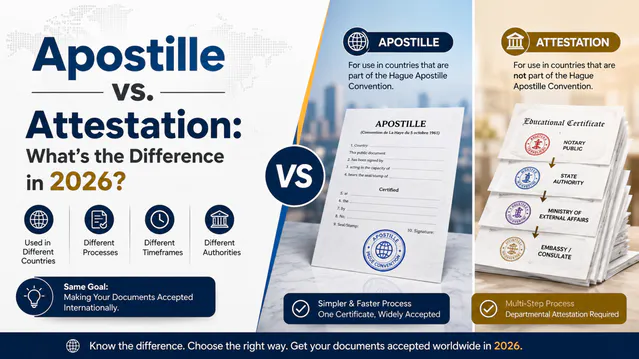
Sri Lanka is not a member of the Hague Apostille Convention. This means an apostille stamp from the Ministry of External Affairs alone is not sufficient for Sri Lanka. You cannot replace the Sri Lanka Embassy attestation step with an apostille.
The correct process for Sri Lanka requires the full attestation chain ending with the Sri Lanka High Commission stamp. If someone tells you that an MEA apostille is enough for Sri Lanka, that is incorrect. Your documents need to go through the specific Sri Lanka attestation chain described in this guide.
Which documents need Sri Lankan attestation?
The documents required for attestation depend on your purpose, whether it is employment, education, a family visa, or business. Here is a breakdown by category.
Educational documents that typically require Sri Lankan attestation include your degree certificate, diploma certificate, mark sheets, and academic transcripts. These are needed when you are joining a job in Sri Lanka that requires educational qualification verification or when applying for a student visa at a Sri Lankan institution.
Personal documents that require attestation include your birth certificate, marriage certificate, divorce certificate, and death certificate. These are needed for family visa applications, dependent visa sponsorship, marriage registration abroad, and similar personal purposes.
Commercial documents that require attestation include your power of attorney, memorandum of articles, certificate of incorporation, company profile, and other business documents. These are relevant if you are setting up or expanding a business operation in Sri Lanka.
For most Indian nurses and healthcare professionals going to Sri Lanka for employment, the documents that go through attestation are your BSc Nursing or GNM degree certificate, your mark sheets, your nursing council registration certificate, and any experience certificates your Sri Lankan employer asks for.
The Two Routes for Sri Lanka Attestation
There are two ways to attest documents for Sri Lanka. Choosing the right route for your situation and timeline is important before you begin.
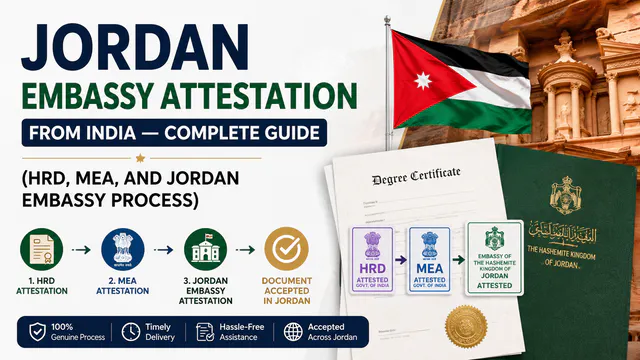
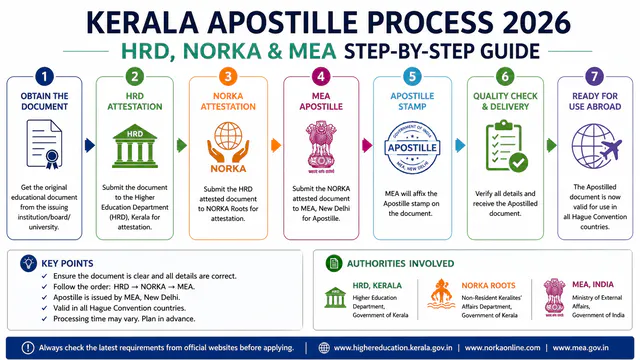
Route 1 is the standard state-level route. Your educational documents go through your state HRD department first, which typically takes 30 to 35 working days. Your personal documents go through your state home department. After state-level attestation, all documents proceed to the Ministry of External Affairs (MEA), which takes approximately 2 working days. After MEA, documents go to the Sri Lanka High Commission in New Delhi or Mumbai for the final attestation stamp.
Route 2 is the faster SDM route. Instead of going through the state HRD or home department, your documents are authenticated by a sub-divisional magistrate (SDM) office in Delhi. SDM attestation is significantly faster than the state-level route and is accepted by the Sri Lanka High Commission. After SDM, the same MEA step follows, and then the Sri Lanka High Commission stamp. This route is commonly chosen by people who need attestation completed quickly.
Both routes end at the Sri Lanka High Commission. The difference is the starting point and the total time involved.
Step-by-Step Attestation Chain for Sri Lanka
Here is the complete chain for each document category, broken down clearly.
For educational documents such as degree certificates, diplomas, and mark sheets:
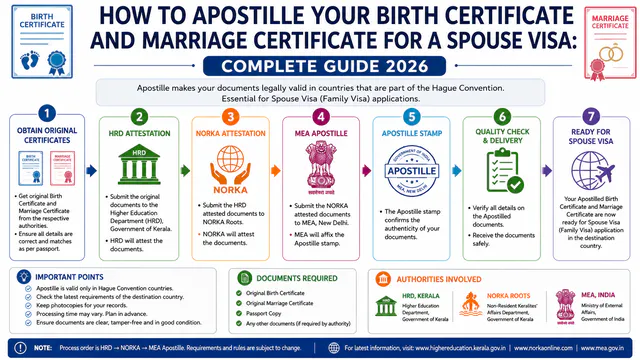
Step 1 is notarization. Before anything else, your documents need to be notarized by a registered notary public. This is a quick step done at the start of the process.
Step 2 is State HRD Attestation (Route 1) or SDM Attestation (Route 2). For Route 1, your educational documents go to the Human Resources Department of the state where your university or college is located. Note that this is the state of the issuing institution, not necessarily the state where you currently live. A Kerala nurse whose degree was issued by a university in Tamil Nadu must go through Tamil Nadu HRD, not Kerala HRD. For Route 2, documents go to the Sub-Divisional Magistrate in Delhi instead, which is faster.
Step 3 is MEA attestation. After state HRD or SDM, your documents go to the Ministry of External Affairs in New Delhi. MEA applies its stamp confirming the state-level attestation is genuine. This step takes approximately 2 working days.
Step 4 is Sri Lanka High Commission attestation. After MEA, documents go to the Sri Lanka High Commission in New Delhi (or the Consulate in Mumbai, where applicable). The High Commission applies the final attestation stamp, making your documents officially valid for use in Sri Lanka. This step typically takes 7 to 10 working days, depending on the High Commission's current workload.
For personal documents such as birth certificates and marriage certificates:
The chain is the same, except Step 2 uses the State Home Department instead of HRD for Route 1. For Route 2, SDM replaces the Home Department as well.
For commercial documents:
The chain starts with Chamber of Commerce attestation, followed by notary, then MEA, and then Sri Lanka High Commission attestation.
Timeline—How Long Does Sri Lanka Attestation Take?
If you are using Route 1 (HRD or Home Department), the complete timeline from notarization to Sri Lanka High Commission stamp is approximately 50 to 55 working days, which is around 10 to 11 weeks.
If you are using Route 2 (SDM), the complete timeline is significantly shorter, at approximately 15 to 20 working days for the entire process.
Most professionals and job seekers going to Sri Lanka choose Route 2 because of the time advantage, and it is widely accepted by the Sri Lanka High Commission.
These timelines assume your documents are complete, correctly formatted, and free from errors. Any rejection or return at any stage resets the clock for that step. Getting documents right before submission is the most effective way to stay within the standard timeline.
Documents Needed When Submitting for Sri Lanka Attestation
To submit documents for attestation, you typically need to provide the original certificate being attested, self-attested photocopies of the certificate, a clear color copy of your passport covering the first and last pages, and any previously attested copies if you are moving to the next stage in the chain.
For the Sri Lanka High Commission step specifically, your documents must already carry the MEA stamp before the High Commission will accept them. Submitting to the High Commission without MEA attestation is a common mistake that causes the entire submission to be returned.
What Happens After Attestation — The MOFA Step in Sri Lanka
Many people assume that once the Sri Lanka High Commission has stamped their documents in India, the attestation process is finished. For most employment and visa purposes in Sri Lanka, there is one more step that happens after you arrive.
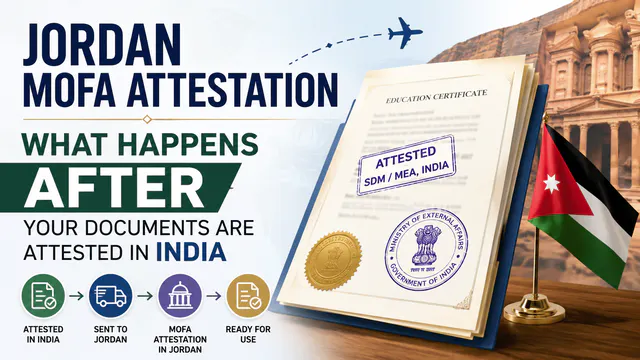
This is the MOFA step, which stands for the Ministry of Foreign Affairs of Sri Lanka. After reaching Sri Lanka and starting your employment or registration process, your attested documents may need to go through MOFA Sri Lanka for final in-country verification before they are accepted by your employer, hospital, or licensing authority there.
This step is specific to the Sri Lanka side and is different from everything done in India. For a full explanation of what MOFA attestation involves, when it is required, and how to complete it, see our detailed guide on Sri Lanka MOFA attestation.
Who Needs Sri Lanka Attestation — Common Situations
Professionals going to Sri Lanka for employment whose employers require verified educational and professional documents. Nurses and healthcare professionals who are joining Sri Lankan hospitals or healthcare facilities and need attested nursing degrees and experience certificates. For a detailed guide specific to nurses and doctors, see our Certificate Attestation for Sri Lanka Healthcare Jobs blog.
Students applying for admission to universities or higher education institutions in Sri Lanka. Families applying for dependent or family visas who need personal documents attested. People who previously worked or stayed in Sri Lanka and now need their Indian documents verified for Sri Lankan authorities. Business owners or companies establishing operations in Sri Lanka who need commercial document attestation.
Common Mistakes That Delay Sri Lanka Attestation
Thinking an apostille works for Sri Lanka is the first and most costly mistake. Sri Lanka is not a Hague Convention member. An apostille stamp is not accepted. You need the full embassy attestation chain.
Going to the wrong state HRD office is common among those on Route 1. The HRD must be from the state where the issuing institution is located, not where you live. Submitting to the wrong HRD results in rejection and weeks of lost time.
Submitting to the Sri Lanka High Commission without MEA attestation means the High Commission will return your documents. MEA must always come before the High Commission step.
Name mismatches across documents are flagged at every stage. Your full name must match exactly across your certificate, your passport, and any supporting forms. A middle name present on one document and absent on another creates a discrepancy.
Laminated certificates are rejected. If your original certificates are laminated, you must get them de-laminated before starting the attestation process. Some attestation agencies can help with this.
Skipping the notarization step and submitting directly to state HRD or SDM results in rejection. Every chain starts with notarization
Do you also need a Sri Lanka PCC?
For many purposes in Sri Lanka, including employment and long-term stay, you may also need a Police Clearance Certificate. If you previously lived or worked in Sri Lanka and are now applying for a new Sri Lanka visa or job, you may specifically need a Sri Lanka PCC confirming your criminal record status during your time there.
This is a separate process from attestation and runs in parallel. Trueway International handles Sri Lanka PCC applications from India through our Sri Lanka PCC service.
Final Checklist Before Starting Sri Lanka Attestation
Confirm your specific document list with your Sri Lankan employer, university, or visa authority. All documents are in your current passport name with no inconsistencies. Original certificates are available and not laminated. Decide between Route 1 (HRD, slower) and Route 2 (SDM, faster) based on your timeline. Ready to provide a clear color passport copy for each stage. Allow enough time before your Sri Lanka joining date or visa submission deadline.
Need Help With Sri Lanka Attestation?
The multi-step chain from notarization through HRD or SDM, MEA, and the Sri Lanka High Commission is manageable with the right support. Getting one step wrong or submitting to the wrong authority adds weeks to your timeline.
Trueway International manages the complete Sri Lanka Embassy attestation process from India, including document collection, HRD or SDM authentication, MEA attestation, and Sri Lanka High Commission submission. We handle educational, personal, and commercial documents across Kerala, Bangalore, Chennai, Delhi, Mumbai, and all major Indian cities.
See our embassy attestation service to get started.