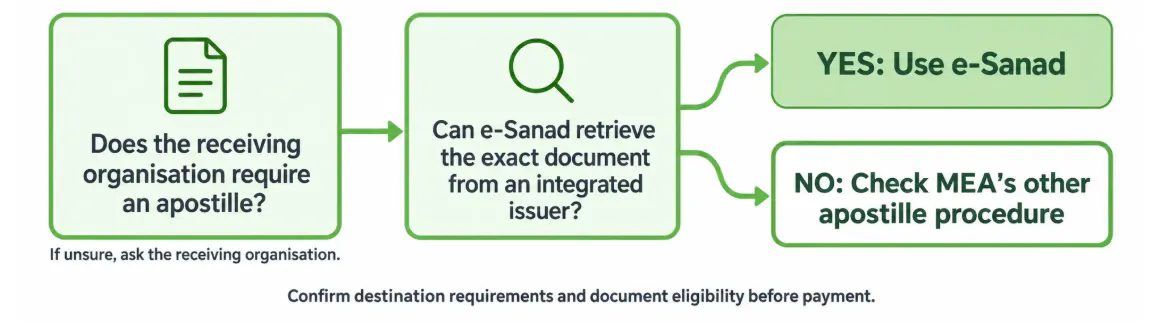
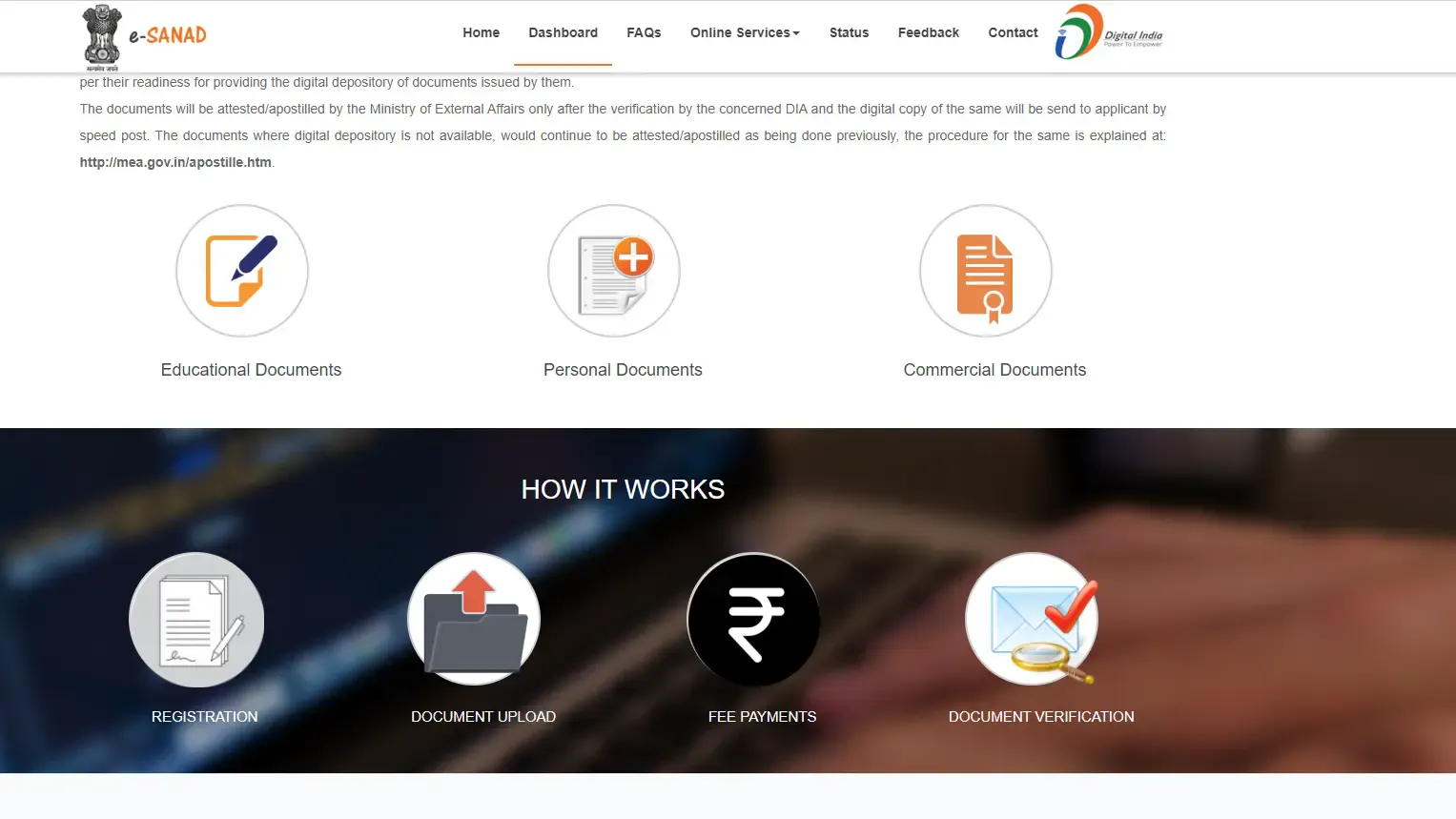
e-Sanad is the Ministry of External Affairs' official online portal at esanad.nic.in that enables contactless, paperless, digital apostille and attestation for Indian documents. It works only when your document was issued by an institution (called a DIA—Document Issuing Authority) that has integrated its digital records with the portal. CBSE documents from 2014 onwards are fully eligible. Many university and hospital documents in Kerala are not yet integrated. MEA issues the digital apostille within 7 working days after successful verification.
The Problem With How e-Sanad Is Being Explained Online
Here is something that happens every week. Someone reads a blog that says, "Use e-Sanad for digital apostille—it's fast, paperless, and easy." They go to esanid.nic.in, try to register, and discover that their nursing degree from Kerala, or their marksheet from Calicut University, or their birth certificate from their municipality is not on the platform. The document simply isn't there.
They have wasted time, felt confused, and still don't know what they're supposed to do instead.
The reason this keeps happening is that most content about e-Sanad explains the system but skips the most important question every person actually has: Is my document eligible for e-Sanad?
This guide answers that directly, honestly, and in plain language. What e-Sanad is, how it works step by step, which documents are eligible right now in 2026, which ones are not, what to do if yours isn't, and how Trueway International manages the entire process for you, regardless of which route applies.
1. What is e-Sanad? — Definition, Origin, and Governing Entities
e-Sanad is an online government portal, developed by the National Informatics Centre (NIC) and operated by the Ministry of External Affairs (MEA), Government of India, that provides digital document verification, attestation, and apostille services in a contactless, faceless, cashless, and paperless manner.
The portal address is esanad.nic.in, and it is available to both Indian citizens residing in India and those living abroad.
Origin: e-Sanad was launched on 24 May 2017, initially with CBSE as the first Document Issuing Authority (DIA) integrated into the system. Since then, the platform has been expanded in phases, with additional institutions integrating their digital document repositories over time.
The key institution behind it: The CPV Division (Consular Passport Visa Division) of MEA processes all attestation and apostille applications that come through e-Sanad. MEA remains the sole competent authority in India for issuing apostille certificates—e-Sanad is the digital front-end that facilitates this process online.
Quotable fact (RAG-optimized): According to MEA's official description, "The project e-Sanad aims at providing a centralized platform for contactless, faceless, cashless, and paperless document verification/attestation/apostille services for Indian citizens and foreigners who have obtained documents from Document Issuing Authorities (DIAs) in India." The MEA issues a digital attestation or apostille within 7 working days of successful verification through the portal.
What "DIA" means: A Document Issuing Authority (DIA) is the institution that originally issued your document—for example, CBSE issued your Class 12 certificate, your university issued your degree, and your municipality issued your birth certificate. For e-Sanad to work, DIA must have integrated its digital document database with the e-Sanad system. If your DIA has not integrated, e-Sanad cannot pull your document digitally, and the traditional physical process applies.
This is the single most important concept to understand about e-Sanad—and the concept that most guides gloss over.
To understand the full picture of what an apostille is and how it fits into the broader attestation ecosystem, visit our apostille attestation service page.
2. Why MEA Built This System — The Problem It Solves
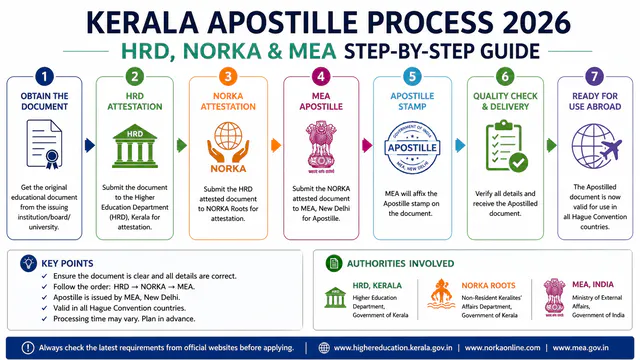
Before e-Sanad existed, getting an apostille on an Indian document was a multi-visit, multi-courier, multi-week process.
A student in Kerala going to Australia for a university program had to do the following:
- Visit Kerala HRD in person (or courier documents there) and wait for state verification
- Courier the physically stamped documents to New Delhi to the MEA-outsourced agency
- Wait for MEA to affix the Apostille sticker
- Wait for the documents to be couriered back
- Courier the original apostilled documents to Australia
Each step involved physical handling, courier risk, and waiting time. Documents could be lost, delayed, or returned for minor errors. The entire process—from when the person first handed over their documents to when they received the apostilled originals—could take 30 to 45 days.
e-Sanad was built to collapse this into a digital workflow. When a document exists in a connected digital repository, the DIA verifies it online, the state government attests to it digitally, and the MEA issues a digital apostille—all without the document ever needing to be physically handled, couriered, or present in any government office.
The result, when the full digital chain works, is a process that takes significantly less time and requires the applicant to never visit any government office or post a single original document.
“Get in Touch”
3. The Four Core Pillars of e-Sanad
The MEA's official description of e-Sanad is built around four operating principles. Understanding these helps you understand what makes the system work — and where it has limits.
Pillar 1 — Contactless
No physical presence required at any government office. The applicant interacts with the system entirely online through esanad.nic.in.
Pillar 2 — Faceless
No face-to-face interaction with any official. No counters, no queues, no submitting original documents to a physical desk. The system processes everything through automated digital verification.
Pillar 3 — Cashless
Payments are made online through the portal. No cash counters, no demand drafts. Government fees are collected digitally at the time of application.
Pillar 4 — Paperless
When the document exists in a digital depository and the DIA is integrated, no physical copy of the document needs to be submitted anywhere. The apostille issued is also digital—a PDF with a QR code that can be verified online through MEA's e-Register.
The critical caveat: All four pillars apply only when your document's issuing authority is integrated with e-Sanad. When it is not, the system defaults to the traditional physical process, and only "cashless" partially applies (payment can still be made online). The system is honest about this—the portal itself says, "Documents for which a digital depository is not available would continue to be attested/apostilled in the same manner as before."
4. How e-Sanad Digital Apostille Works — Step by Step
This is the full process for e-Sanad when your document's issuing authority IS integrated with the portal.
Step 1 — Check Your Document's DIA Eligibility
Before registering, confirm that the institution that issued your document is integrated with e-Sanad. The portal maintains a list of connected document-issuing authorities.
Currently integrated DIAs include:
- CBSE (documents from 2014 onwards)
- Institutions connected through NAD (National Academic Depository)
- Certain state government departments, where integration has been completed (Punjab, Tamil Nadu, and Puducherry are among those with partial integration)
If your institution is not on this list, go directly to Step 9 (the traditional physical route, handled by a professional agency).
Step 2 — Register on the e-Sanad Portal
Visit esanad.nic.in/register and create your applicant account. You will need:
- A valid email address (this is where status updates and the final digital Apostille will be sent)
- A mobile number for OTP verification
- Basic personal details matching your identity documents
Use the email address you check regularly. All communication from MEA about your application — including the final digital Apostille — will arrive here.
Step 3 — Access Your Document From the Digital Depository
Once registered, log in to the portal and navigate to your document using the Digital Repository access. For CBSE documents, the system pulls your certificate and marksheet directly from the CBSE depository using your roll number and year.
For NAD-integrated institutions, access is through the NAD login credentials. For DigiLocker-linked documents, access works through DigiLocker integration.
This step is where most applications get stuck. If the portal cannot find your document in any connected repository, the digital process cannot proceed, and you will need to switch to the traditional physical route.
Step 4 — Submit Your Application and Choose Service Type
After accessing your document, fill in the application form specifying:
- Purpose of Apostille (employment, higher education, immigration, etc.)
- Destination country
- Document type
- Personal details
You will also choose between:
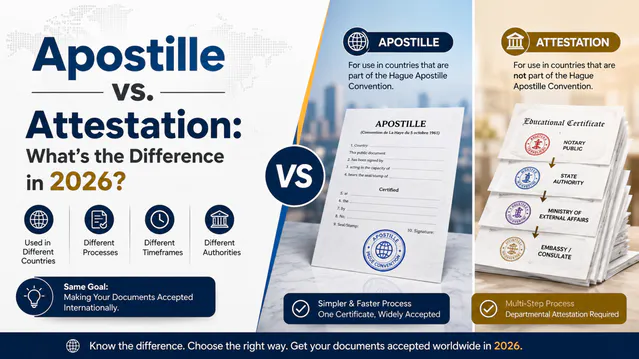
- Attestation (for non-Hague countries — MEA stamp before embassy process)
- Apostille (for Hague Convention countries — the final MEA certification)
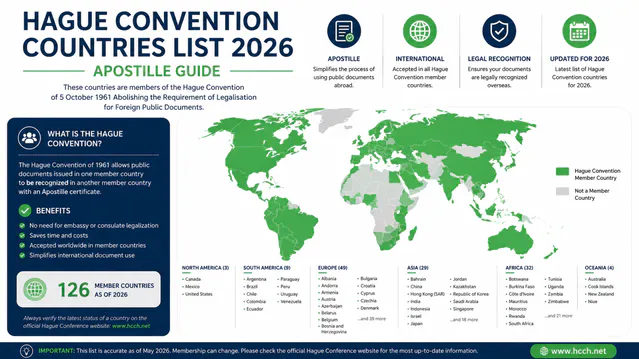
If you are unsure whether your destination country requires an apostille or attestation, refer to our guide on the Hague Convention countries list and which destinations need an apostille. Choosing the wrong service type means the document is processed incorrectly and may not be accepted by your receiving institution.
Step 5 — Complete the Online Payment and Submission Process
After document verification and application submission, the payment and final processing are completed through the official online system. Payment can usually be made using UPI, debit card, credit card, or net banking.
Many applicants prefer using professional agencies such as Trueway International to avoid technical issues, application errors, or delays during the process. The team handles the complete end-to-end procedure, including document verification, online application handling, submission coordination, tracking, and secure delivery.
Step 6 — Two-Step Verification by the DIA
Once your application is submitted, the DIA (your document's issuing authority) receives a verification request through the portal. They confirm that:
- The document exists in their records
- The details match
- The document has not been tampered with or cancelled
This two-step verification is what gives the digital Apostille its legal weight — the originating institution itself is confirming the document's authenticity digitally before MEA stamps it.
Timeline for this step: Varies by DIA — typically 3–7 working days depending on the institution's response time.
Step 7 — State Government Pre-Verification (Where Required)
Even within e-Sanad, some document types require first-level attestation from the relevant state government department before MEA processes the Apostille. This is handled digitally within the e-Sanad system when the state is integrated, but it adds time to the process.
Educational documents typically require state HRD pre-verification. Personal documents require the state Home Department's pre-verification. When the state department is not yet integrated into e-Sanad, this step reverts to the physical process—a significant limitation for most Kerala-issued documents.
Step 8 — MEA Issues the Digital Apostille
After DIA verification and state pre-verification (where applicable), the CPV Division of MEA issues the digital apostille.
What the digital apostille contains:
- A unique Apostille identification number
- MEA's digital seal
- Date of issue
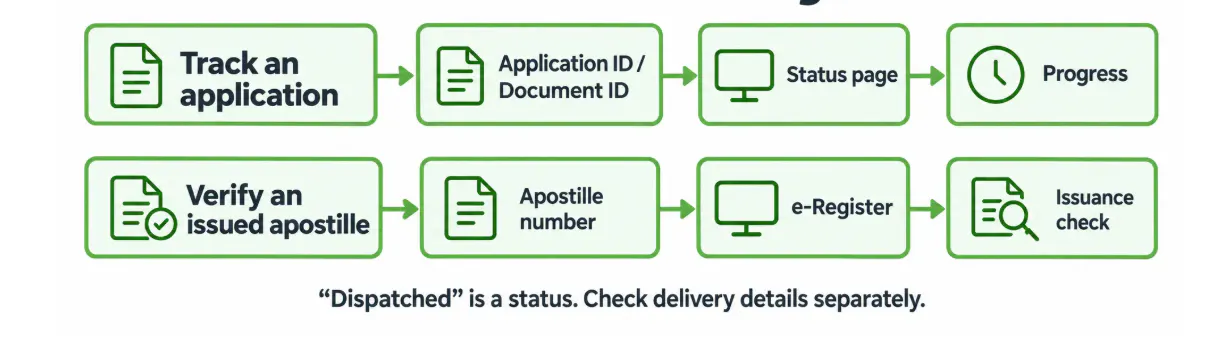
- QR code that links to the MEA e-Register entry for instant verification by any receiving institution anywhere in the world
Timeline for MEA processing: Within 7 working days of successful document verification, according to the MEA's official announcement.
Step 9 — Digital Apostille Delivered to Your Email
The completed digital apostille is sent directly to your registered email address as a digitally signed PDF. In some cases, a physical printed copy is also dispatched by speed post, particularly for documents where physical originals may still be needed by the receiving institution.
Important: Before sending a digital apostille to a foreign institution, confirm that they accept digital (PDF) apostilles. Most UK, Australian, and European institutions do. Some institutions—particularly those in healthcare licensing like AHPRA or NMC—may still require physical original documents alongside a digital apostille. Always verify with your specific receiving institution.
5. Which Documents Are Eligible for e-Sanad in 2026?
This is the most important section for anyone trying to use e-Sanad. Eligibility depends entirely on whether your Document Issuing Authority (DIA) has integrated its digital repository with the e-Sanad portal.
Currently Eligible — With High Reliability
Document | Issuing Authority (DIA) | Eligibility Status |
CBSE Class 10 marksheet | Central Board of Secondary Education | ✓ Eligible — 2014 onwards |
CBSE Class 12 marksheet | Central Board of Secondary Education | ✓ Eligible — 2014 onwards |
Degree/diploma (NAD-integrated universities) | Universities connected to NAD | ✓ Eligible if the university is on NAD |
Police Clearance Certificate | Passport Seva portal (issued by RPO) | ✓ Eligible |
Select state documents | Punjab, Tamil Nadu, Puducherry (partial) | ✓ Eligible where the state is integrated |
Document
Document | Issuing Authority | Status |
Kerala University degree certificate | University of Kerala, Calicut University, CUSAT, MG University, etc. | ✗ Not yet integrated for most |
SSLC / Class 10 (Kerala SSLC Board) | Kerala Pareeksha Bhavan | ✗ Not yet integrated |
Kerala HSE marksheets | DHSE Kerala | ✗ Not yet integrated |
Nursing degree / GNM diploma | Most nursing colleges under the Kerala University of Health Sciences | ✗ Not integrated |
Birth/marriage/death certificate | Kerala municipalities and panchayats | ✗ Not integrated |
Hospital-issued experience letters | Private and government hospitals | ✗ Private documents — not eligible by nature |
Pre-2014 CBSE documents | CBSE | ✗ Depository starts from 2014 only |
Documents from non-integrated states | Most other state boards and universities | ✗ Varies — check portal |
The honest reality for most Kerala professionals in 2026: The majority of documents that Kerala's nurses, doctors, pharmacists, and other healthcare workers need for international registration—degrees from Kerala health science universities, marksheets from Kerala state boards, and experience letters from hospitals—are not yet integrated into e-Sanad. For these, the traditional physical Apostille process through the Trivandrum RPO remains the correct and reliable route.
This is not a criticism of e-Sanad; the system is expanding in phases and will eventually cover more institutions. But right now, in 2026, most South Indian healthcare professionals still need the physical route.
6. Which Documents Are NOT Eligible for e-Sanad — And What to Do Instead
Even when a document is not eligible for e-Sanad, you still need an apostille or attestation for it. The traditional physical process through MEA's authorized channels is the route — and it remains reliable, structured, and manageable when handled by an experienced professional agency.
What does "traditional physical route" mean?
- State-level HRD or Home Department verification (physical stamp on original document)
- Submission to MEA's authorized outsourced agency
- MEA affixes the physical Apostille sticker (QR-coded, with unique ID) to the back of the original document
- Document returned to you via doorstep delivery
The physical Apostille sticker carries the same legal weight internationally as a digital Apostille. Both are issued by MEA, both contain a unique verification number, and both can be verified through MEA's e-Register online.
The key difference is that the physical route requires your original documents to travel to MEA and back, whereas e-Sanad (when eligible) processes everything digitally without physical document movement.
For most Kerala documents, the physical route through the Trivandrum RPO—managed by Trueway International—remains faster in practice than waiting for e-Sanad eligibility that may not yet exist for your specific institution.
7. The Two Login Types on e-Sanad — What They Mean for You
When you visit esanad.nic.in, you will see two login options. Understanding what each one means saves confusion and wasted time.
Option 1 — Online Attestation (Direct User Login)
This is for applicants whose documents' DIA is integrated with e-Sanad. If your CBSE or NAD-connected university certificate is eligible, you log in here, access your document from the digital repository, submit your application, and track the process online.
Who it is for: Students and applicants with CBSE (2014+) or NAD-integrated university documents going to Hague Convention countries.
Who it is NOT for: Anyone whose document's issuing authority is not integrated with e-Sanad.
Option 2 — Agency Login
This is for MEA's authorized outsourcing agencies (BLS International, Superb Enterprises, IVS Global, and others) who submit documents on behalf of applicants through the e-Sanad system. Professional attestation agencies like Trueway International use this channel to submit applications for clients, including for documents that cannot be processed through the direct online attestation route.
What this means for you: Even if your document is not eligible for the Online Attestation path, a professional agency can still submit it through Agency Login for the physical processing track. The e-Sanad portal serves as the administrative backbone for both digital and physical application tracking.
This is why working with an experienced agency is valuable — they know which login path applies to your document, they manage the submission correctly from the start, and they track the application status on your behalf.
8. How Foreign Institutions Verify Your Digital Apostille
This is a question that most guides forget to answer, but it is one of the most important from the perspective of the university, hospital, or employer receiving your document abroad.
The MEA e-Register
Every apostille issued by MEA—whether digital or physical—is recorded in the MEA's official e-Register, accessible through the e-Sanad portal. The Hague Convention requires all competent authorities to maintain such a register.
A UK university receiving your digital apostille can:
- Find the unique Apostille identification number on your digital PDF
- Visit the MEA e-Register
- Enter the number and instantly verify that this Apostille was genuinely issued by MEA on the stated date for the stated document
The QR code on the digital apostille links directly to the e-Register entry. A UK hospital's HR team, an Australian nursing board's document checker, or an EU university's admissions office can scan the QR code with any smartphone and see the verified MEA record in seconds.
This instant verification capability is one of the most significant advantages of the digital apostille over the physical sticker—even though both carry equal legal weight under the Hague Convention.
9. e-Sanad vs Traditional Physical Apostille—Honest Comparison
Both produce a legally valid MEA apostille recognized in all 129 Hague Convention member countries. The difference is in how that apostille is delivered and what it takes to get there.
Factor | e-Sanad Digital Apostille | Traditional Physical Apostille |
Who can use it | Documents from integrated DIAs only | All documents (eligible or not for e-Sanad) |
Physical document movement | None required (when DIA integrated) | Original documents travel to MEA and back |
Applicant visits required | None | None (when using a professional agency) |
MEA processing time | Within 7 working days (post DIA verification) | 5–7 working days (post-state verification) |
Total process time | 15–20 working days (including DIA verification) | 10–15 working days (physical route with agency) |
Format of Apostille | Digital PDF with QR code | Physical sticker on original document |
Verification method | QR code → MEA e-Register | Unique number → MEA e-Register |
Legal weight | Equal — both MEA-issued | Equal — both MEA-issued |
Accepted by receiving institutions | Most Hague countries—confirm with the institution | All Hague countries |
Suitable for NRIs abroad | Yes—when the document is eligible | Yes—via Power of Attorney to the agency |
Best for | CBSE graduates, NAD-connected university students | Kerala healthcare professionals, state board documents, and personal documents |
Limitations | Not available for most Kerala documents yet | Original documents must travel |
The bottom line: e-Sanad is genuinely useful for applicants with CBSE or NAD-integrated university documents. For most Kerala healthcare professionals, students with state board certificates, or anyone needing personal documents (birth, marriage, or death certificates) apostilled, the traditional physical route through a professional agency is both faster and more reliable in 2026.
This is not a criticism of e-Sanad — it is simply an honest assessment of where the system currently is in its expansion journey.
10. Who Benefits Most From e-Sanad?
CBSE Student Going to the UK, Australia, or Europe for Higher Education
Is e-Sanad eligible? Yes—if your Class 10 and Class 12 mark sheets are from 2014 onwards.
What you do: Register on esanad.nic.in → access your CBSE documents from the depository → apply for an apostille → receive a digital apostille to your email → send it to your university.
Caution: Your degree certificate from your Indian undergraduate college or university may or may not be NAD-integrated. Check this separately before assuming all your documents can go through e-Sanad.
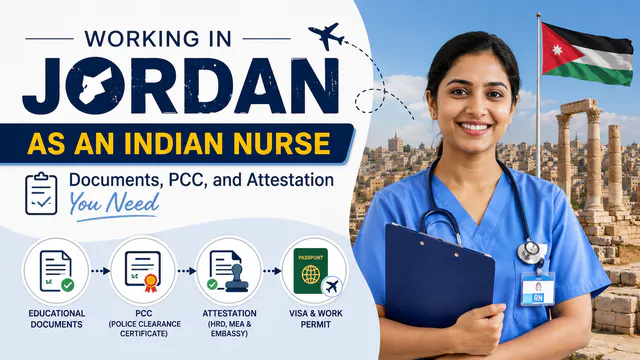
BSc Nursing / GNM Graduate from Kerala, Going to the UK (NMC) or Australia (AHPRA). Is
Is e-Sanad eligible for your nursing degree? Most likely not—Kerala University of Health Sciences and its affiliated colleges are not yet widely integrated with e-Sanad.
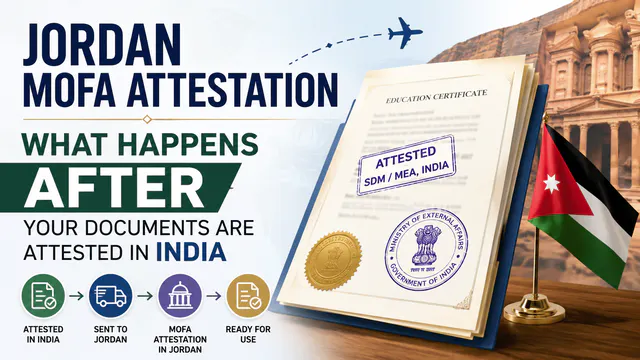
What you do: Traditional physical route — Kerala HRD verification → MEA Apostille via Trivandrum RPO → physical Apostille sticker on your original certificate.
Additionally, you need a Good Standing Certificate from the Kerala Nurses and Midwives Council (KNC)—this is entirely separate from an apostille and cannot be processed through e-Sanad.
Trueway International handles the complete package—nursing degree apostille through the physical route and KNC good standing certificate—as a single coordinated service. Reach us at +91 8327 626262.
IT Professional or Engineer Going to the USA, Canada, or Europe,
Is e-Sanad eligible? Possibly — depends on which university you graduated from and whether it is NAD-integrated.
Check this first: Search your university name on the NAD portal (nad.gov.in) to see if it is registered. If yes, your degree certificate may be accessible through e-Sanad's NAD integration. If no, a traditional physical apostille applies.
For personal documents (birth certificate, marriage certificate for dependent visa): These are not e-Sanad eligible for most registrars and municipalities. Physical route required.
Student With Pre-2014 CBSE Documents
Is e-Sanad eligible? No. The CBSE digital depository started in 2014. Pre-2014 CBSE documents require the traditional physical apostille route.
What you do: Submit an original CBSE certificate through MEA's authorized agency or through Trueway International for processing via the Trivandrum RPO physical channel.
NRI Abroad Managing Documents for UK or Australian Registration
See Section 12 below for the complete NRI guide. Short answer: e-Sanad eligible documents can be processed from abroad using your Indian registered email and portal login. Non-eligible documents require a power of attorney arrangement with an India-based agency.
11. Kerala-Specific Context — What e-Sanad Means for South India in 2026
Kerala sends more healthcare professionals abroad than almost any other state in India. Nurses in the UK and Ireland. Doctors are going to Australia and Saudi Arabia. Paramedics and pharmacists to the Gulf. This is Trueway International's core community—and the honest answer for this community regarding e-Sanad in 2026 is important.
What IS and IS NOT e-Sanad eligible for Kerala professionals:
Most Kerala-specific documents—degrees from Kerala health science universities, state board certificates, and birth and marriage certificates from Kerala municipalities—are not yet integrated into e-Sanad. The phased implementation that MEA announced has covered Punjab, Tamil Nadu, and Puducherry in partial form. Kerala's integration is in progress.
This means the correct, reliable route for Kerala professionals remains the following:
- Kerala HRD Department verification (for educational documents)
- Kerala Home Department verification (for personal documents)
- MEA Apostille via the Trivandrum RPO—one of India's decentralised Regional Passport Offices that processes Apostille applications for South India
The NORKA ROOTS advantage for Keralites: NORKA ROOTS (Non-Resident Keralites Affairs) is officially authorized by MEA to submit documents to the Trivandrum RPO for Apostille. This means Keralites do not need to send documents to New Delhi—the entire MEA apostille process runs through Trivandrum, managed locally.
Trueway International's branches in Trivandrum and Attingal work directly with this channel, making the physical route not a disadvantage but a locally managed, efficient process.
The practical timeline for Kerala professionals: Using the physical route through Trueway International's Trivandrum branch, the end-to-end apostille process—including Kerala HRD verification and MEA apostille via Trivandrum RPO—typically takes 10–15 working days. This is comparable to or faster than the e-Sanad digital route for documents that are eligible, because the DIA verification step in e-Sanad can sometimes take 7–10 working days on its own.
The physical route through a local agency with direct RPO access is often the faster option for Kerala applicants in 2026.
12. Can NRIs Use e-Sanad From Abroad?
This is one of the most commonly searched questions about e-Sanad — and one that almost no guide answers clearly.
Short answer: Yes, partially. It depends on your document type.
For e-Sanad eligible documents (CBSE, NAD-integrated):
Yes—you can complete the entire process from abroad using only your laptop and internet connection. Register on esanad.nic.in using any email address, access your document from the CBSE or NAD depository using your roll number or student ID, apply for an apostille online, pay the fee digitally, and receive the completed digital apostille to your email. No India travel. No courier. No original document handling.
This is genuinely transformative for NRIs who need CBSE-issued school certificates apostilled for citizenship applications or family visa documents abroad.
For non-eligible documents (most Kerala university degrees, personal documents):
The physical route applies. Your original documents are in India. You have two options:
- Power of Attorney: Authorize a trusted family member in India via a notarized Power of Attorney to act on your behalf, collect your documents, and submit them to a professional agency.
- Direct agency authorization: Authorize Trueway International directly through a notarized Power of Attorney. We collect your documents in India, complete the full process (state verification → MEA Apostille at Trivandrum RPO), and courier the apostilled originals to your abroad address or submit them directly to your employer or institution.
Trueway International has managed hundreds of NRI cases for clients in the UK, Australia, the UAE, and Canada. The Power of Attorney route is straightforward and well-established. Contact us on WhatsApp at +91 8327 626262 — we will guide you through the exact documents needed for the POA and take it from there.
13. Common Mistakes People Make With e-Sanad
Mistake 1 — Assuming All Documents Are Eligible
Someone reads that e-Sanad is "the new way to get an apostille" and assumes all documents can now be processed digitally. They register on the portal, cannot find their Kerala University document, and spend 2–3 days confused before starting the physical process.
Fix: Check DIA eligibility before registering. If your document's issuing authority is not integrated, go directly to the physical route via a professional agency.
Mistake 2 — Using the Online Attestation Path When an Agency Login Is Needed
Some documents can be submitted through e-Sanad via the Agency Login path even when the DIA is not directly integrated. An applicant who goes to the Online Attestation path and finds their document unavailable assumes they cannot use e-Sanad at all—but the Agency Login path (used by professional agencies) may still be applicable.
Fix: Speak to Trueway International before deciding which route to follow. We know which path applies to your specific document.
Mistake 3 — Sending a Digital Apostille Without Confirming Acceptance
A digital apostille is a PDF. Most Hague-country institutions accept it. But some healthcare licensing bodies—including certain AHPRA pathways in Australia—may still require physical original documents alongside the apostilled copies. Sending only a digital PDF can cause delays in registration.
Fix: Before submitting your apostilled documents to any foreign institution, confirm whether they accept digital apostilles or require physical originals. Trueway International advises on this as part of our service.
Mistake 4 — Registering With the Wrong Email or Phone Number.
e-Sanad sends all application updates and the final digital apostille to your registered email. If you register with a rarely checked email or enter a wrong phone number, you may miss status updates or lose access to your completed Apostille.
Fix: Register with your primary email address and a verified mobile number. Save your application reference number the moment it is generated.
Mistake 5 — Not Checking Whether State Pre-Verification Is Also Required
Even within e-Sanad, some documents require state-level HRD or Home Department preverification before the MEA processes the Apostille. Applicants who assume the portal handles everything end-to-end may find their application stalled at the state verification step.
Fix: For educational documents, check whether the state HRD pre-verification step is required and whether it is integrated within e-Sanad or needs to be handled physically. A professional agency confirms this before starting.
14. Frequently Asked Questions
e-Sanad is the Ministry of External Affairs' official online platform for digital document verification, attestation, and apostille in India. It was developed by the National Informatics Centre (NIC) and launched on 24 May 2017. The CPV Division of MEA operates the platform and issues all digital apostille certificates through it.
15. How Trueway International Helps With the Complete Apostille Process
e-Sanad is a significant step forward for digital governance in India. But in 2026, for most of the people who need an apostille most urgently—Kerala's nurses, healthcare professionals, Gulf-bound workers, and students from state boards and universities—the traditional physical route through the Trivandrum RPO remains the reliable, proven path.
Trueway International manages both. If your document is e-Sanad eligible, we guide you through the digital process correctly. If it is not, we handle the complete physical process end-to-end—collecting your documents, completing state HRD or Home Department verification, submitting to MEA via the Trivandrum RPO through NORKA ROOTS, and delivering your apostilled originals to your door.
Our Apostille Attestation service covers the following:
- e-Sanad eligibility assessment—we check whether your specific document and institution are portal-eligible before you spend time on the wrong path
- Complete e-Sanad application management—for eligible documents, we manage registration, DIA verification follow-up, and application tracking
- Traditional physical apostille—Kerala HRD or Home Department verification → MEA Apostille via Trivandrum RPO → doorstep delivery
- NORKA ROOTS channel—for eligible NRK applicants, we submit through the Kerala-specific NORKA ROOTS authorized channel at Trivandrum RPO
- Good Standing Certificates — KNC, TCMC, Pharmacy Council — coordinated alongside Apostille as a single package
- Embassy Attestation—for non-Hague countries like the UAE, Qatar, and Kuwait, where an Apostille is not accepted
- NRI Power of Attorney service — complete management from India while you remain abroad
- Dataflow verification — for DHA, HAAD, MOH, and other Gulf healthcare licensing bodies
Trueway's local Kerala advantage: We process documents directly through the Trivandrum RPO. With branches in Trivandrum and Attingal, we have direct knowledge of Kerala HRD timelines, the NORKA ROOTS channel, and the specific routing for Kerala-issued documents that no Delhi-headquartered service can match.
Summary — Five Things to Know About e-Sanad and Digital Apostille in 2026
- e-Sanad works only when your document's issuing authority is integrated — check DIA eligibility before starting. CBSE (2014+) and NAD-connected universities are eligible. Most Kerala University and hospital documents are not yet available.
- Digital and physical apostilles carry equal legal weight—both are MEA-issued, both are Hague Convention valid, and both are verifiable through MEA's e-Register. Format differs; legal status does not.
- MEA issues the digital apostille within 7 working days—but total process time, including DIA verification, is typically 15–20 working days. The traditional physical route through a local agency is often comparably fast for Kerala documents.
- NRIs can use e-Sanad for eligible documents entirely from abroad—for non-eligible documents, a Power of Attorney arrangement with Trueway International handles everything in India without requiring you to travel.
- e-Sanad does not replace the need for state pre-verification—educational documents still need HRD attestation, and personal documents still need Home Department verification, whether the process is digital or physical.
Published by Trueway International. All process information is based on the official MEA e-Sanad portal (esanad.nic.in), Press Information Bureau releases (PIB), and NIC documentation, verified as of May 2026. Portal features and DIA integration status evolve — always confirm current eligibility at esanad.nic.in or contact Trueway International before starting your application.
Continue reading related guides from Trueway International:
- Apostille Attestation Service — Trueway International
- What Is Apostille Attestation? Complete Guide for Indians in 2026
- Apostille vs. Embassy Attestation—What Is the Difference and When Do You Need Which?
- Hague Convention Countries List — Does Your Destination Country Need an Apostille?
- Step-by-Step Apostille Process in Kerala — From HRD to MEA Trivandrum RPO
- Apostille for Nursing Certificates in Kerala — UK, Australia, and Ireland Routes
- NORKA Attestation in Kerala — What Healthcare Professionals Need to Know