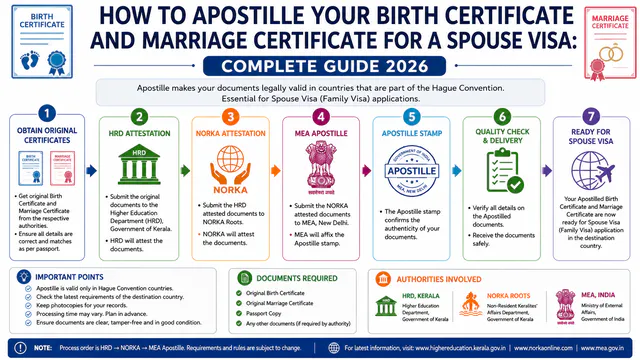
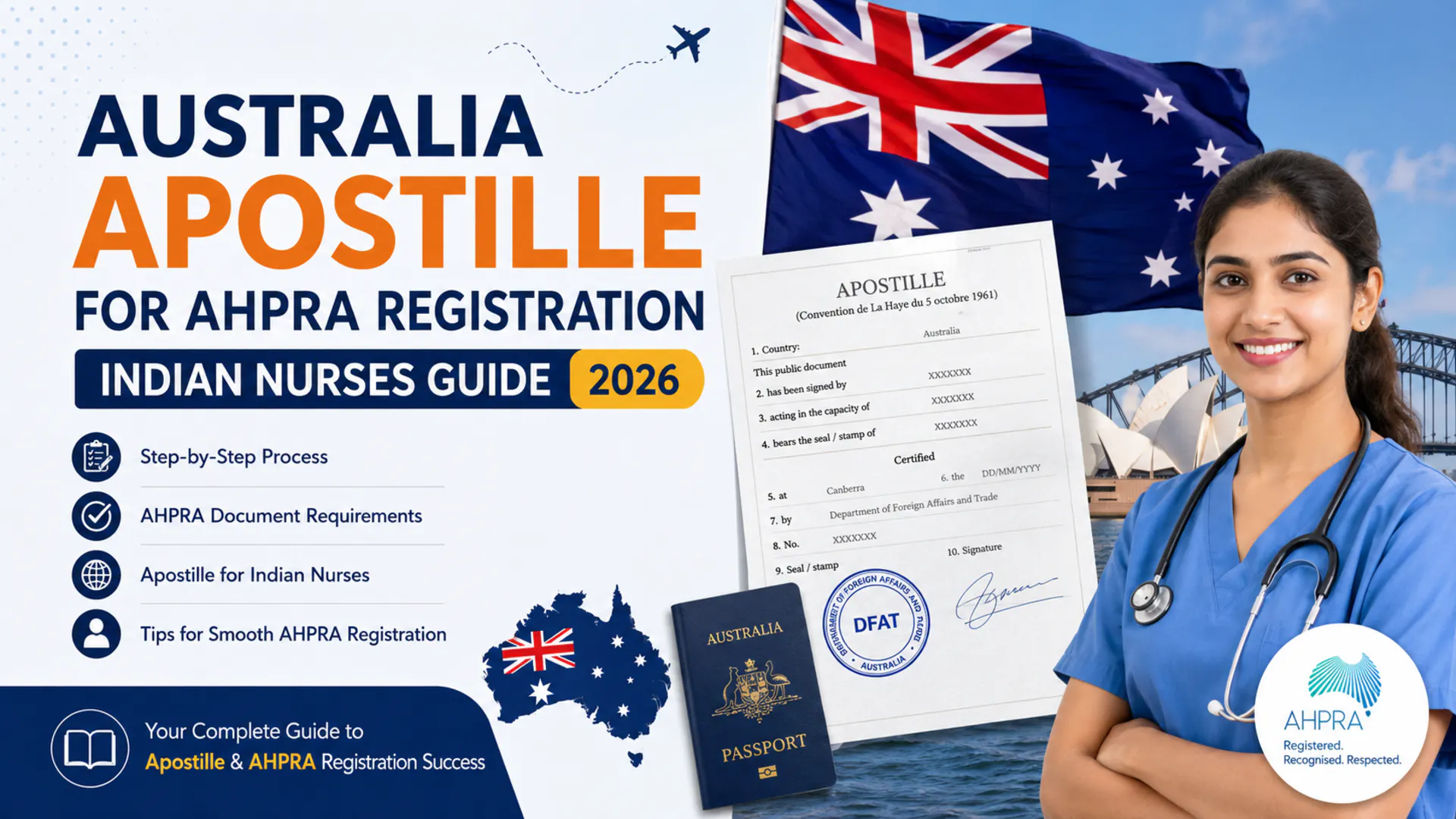
Australia has been a Hague Convention member since 1973. Indian nursing documents for AHPRA registration need an MEA apostille—the complete India-side process is Kerala HRD (NORKA ROOTS) → MEA apostille via Trivandrum RPO. However, AHPRA does not accept apostilled originals physically mailed to Australia — it requires certified copies. The apostilled original stays with you safely in India; certified copies of the apostilled document are what you submit. Your KNC Good Standing Certificate is only valid for 3–6 months and must be timed carefully against your AHPRA application date.



The Document Step That Derails More Australian Nursing Dreams Than Any Other
She has spent four years getting her BSc. nursing degree. She has researched AHPRA. She knows about ANMAC. She knows she needs IELTS 7.0. She knows the visa pathways.
Then she starts the document process.
She gets the MEA apostille done on her nursing degree. She gets her KNC in good standing. She puts everything together and mails the apostilled originals to AHPRA in Australia.
Six weeks later, she gets a response. AHPRA has retained its original documents. They will not be returned.
It is a real outcome that has happened to nurses who did not know one critical fact about AHPRA's document policy: AHPRA requires certified copies—not original documents. The apostille goes on the original, which you keep. What goes to AHPRA is a certified copy of that apostilled original.
This guide exists because the Kerala nurse going to Australia deserves to know exactly what to apostille, exactly what to send, exactly what AHPRA accepts, and exactly how the apostille process in Kerala maps to the AHPRA registration journey—step by step, in one place, without having to piece it together from five different guides that each tell half the story.
1. Why Australia Accepts MEA Apostille
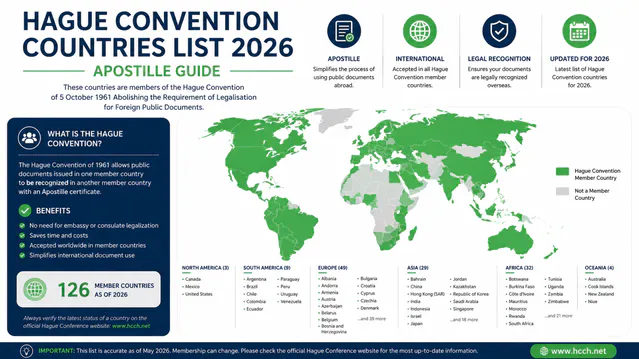
MEA Apostille for Australia: An MEA Apostille is a certificate issued by India's Ministry of External Affairs under the Hague Convention of 1961 that makes Indian public documents legally recognized in all Hague member countries — including Australia — without any additional embassy or consulate verification in India.
The legal basis:
Quotable fact: Australia has been a Contracting Party to the Hague Apostille Convention since 1 November 1973, according to the official HCCH status table at hcch.net. India acceded to the same Convention on 26 October 2005. As both countries are Hague Convention members, an Indian document apostilled by MEA is legally recognized in Australia without any additional legalization step — no Australian High Commission stamp required in India.
This bilateral Apostille recognition is why the previous process — which included submitting Indian documents to the Australian High Commission in India for a separate legalization stamp — is no longer required. That process was discontinued when India joined the Hague Convention in 2005. Any guide still describing the Australian High Commission attestation of Indian documents for AHPRA purposes is describing an outdated process.
What the Apostille certifies: MEA Apostille certifies that your Indian nursing document carries a genuine signature from a recognized authority, issued by a legitimate Indian institution. It authenticates the document's origin and the authority of the person or body that issued it. It does not verify the document's content or certify that your qualifications meet Australian standards — that is ANMAC's role.
For a complete understanding of the apostille process in India and which countries accept it, see our complete apostille guide for India and our Hague Convention countries list.
2. AHPRA, NMBA, and ANMAC — Three Bodies, Three Roles
One of the most common sources of confusion for Indian nurses planning to register in Australia is using AHPRA, NMBA, and ANMAC interchangeably. They are three different entities with three different roles—and they interact with your documents at three different stages.
AHPRA — Australian Health Practitioner Regulation Agency
Australian Health Practitioner Regulation Agency Role: National regulatory body that grants or refuses registration to health practitioners in Australia, including nurses. Official portal: ahpra.gov.au Key function for Indian nurses: AHPRA processes your registration application, assesses your eligibility, and issues your nursing registration number. Without AHPRA registration, you cannot legally practice nursing in Australia.
Quotable fact: According to the Australian Health Practitioner Regulation Agency (AHPRA), "AHPRA registers health practitioners in Australia." We only register people who have the skills and qualifications to provide competent and ethical care. " AHPRA works in partnership with the Nursing and Midwifery Board of Australia (NMBA), which sets the registration standards that applicants must meet.
NMBA — Nursing and Midwifery Board of Australia
Nursing and Midwifery Board of Australia Role: Sets the standards for nursing registration in Australia — including English language proficiency, criminal history, and professional competency standards. NMBA operates under AHPRA. What this means for you: The standards your documents must meet are set by NMBA. AHPRA administers the registration process according to those standards.
ANMAC — Australian Nursing and Midwifery Accreditation Council
Australian Nursing and Midwifery Accreditation Council Role: Skills assessment body that assesses whether internationally qualified nurses' qualifications are substantially equivalent to Australian nursing standards. Official portal: anmac.org.au. What this means for you: For most Indian nurses who are not coming from AHPRA-approved countries (the UK, Ireland, the US, Canada, Singapore, and Spain), ANMAC assessment is the required first step before AHPRA considers your registration application.
The sequence: ANMAC assessment → AHPRA registration application → NMBA registration granted.
These are three separate applications, three separate bodies, and three potentially different document sets. Trueway International's AHPRA verification service supports the complete journey, from document apostille to ANMAC submission to AHPRA registration.
Put your details here
3. The April 2025 AHPRA Pathway Change — BSc vs GNM in 2026
In April 2025, AHPRA introduced significant changes to its IQNM (Internationally Qualified Nurse and Midwife) registration pathway. Understanding which pathway applies to you determines which documents you need and how the assessment proceeds.
BSc Nursing (4-Year Degree) — The Direct Pathway
If you hold a Bachelor of Science in Nursing (BSc Nursing) from a recognized Kerala university, such as KUHS, you are eligible to apply through AHPRA's direct IQNM pathway.
What happens: AHPRA assesses your qualifications. If your BSc in nursing is on AHPRA's recognized qualifications list, you may proceed toward direct registration. AHPRA may direct you to complete an outcomes-based assessment or specific English-language clinical modules depending on the assessment outcome.
Documents needed for this pathway: Full list in Section 6.
GNM (General Nursing and Midwifery) — The Bridging Pathway
If you hold a GNM diploma rather than a BSc nursing degree, your pathway is different and typically longer.
Quotable fact: According to Gemini Education & Migration's 2026 guide for Indian nurses, "AHPRA will typically classify GNM qualifications under AHPRA Outcome 4, which means your qualification is not considered substantially equivalent to the Australian Registered Nurse standard. You will usually be directed toward a bridging program—either completing additional academic units or enrolling in an Australian nursing program to bridge the gap."
What this means practically: GNM nurses can still become registered nurses in Australia. The pathway is different:
- You may need to complete a bridging program or specific academic units in Australia
- Alternatively, you can enroll in an Australian Diploma of Nursing (18 months) and qualify as an Enrolled Nurse first, then pursue a Bachelor's degree top-up
Documents needed for GNM pathway: See Section 12 for the GNM-specific document guide.
4. The Most Important Rule: Apostilled Originals vs Certified Copies for AHPRA
This is the most widely misunderstood rule in the AHPRA document process for Indian nurses — and the one that causes the most irreversible mistakes.
The rule:
Quotable fact: According to AHPRA's official guidance for international practitioners (ahpra.gov.au), "Do not send original documents to AHPRA, as they will not be returned. Instead, certified copies must be provided." The certification requires the certifier's signature and initials, date of certification, contact phone number, professional title, and a statement reading "I have sighted the original document and certify this to be a true copy."
What this means for your apostille:
Step 1: Get an MEA apostille on your original degree certificate, mark sheets, and other required documents.
Step 2: Keep the apostilled originals safely in India. Do not mail them to Australia.
Step 3: Have a notary public, solicitor, or authorized person sight the apostilled original and certify a photocopy—following AHPRA's specific certification requirements.
Step 4: Submit the certified copy to AHPRA — not the original.
Why the apostille still matters: The certified copy must accurately reflect what the original document shows—including the MEA Apostille sticker on the reverse. The certifier sights the apostilled original, certifies a copy of the complete document (including the apostille), and that certified copy is what AHPRA receives.
What happens if you mail your apostilled originals? AHPRA retain all original documents submitted to them. They do not return them. If you mail your apostilled BSc nursing degree to AHPRA, you lose that document permanently. Getting a replacement from KUHS and going through the apostille process again is a significant delay and additional effort.
This is one of the most consequential pieces of information for a Kerala nurse preparing for AHPRA — and the one most completely absent from every attestation guide and most AHPRA guides.
5. Which documents need an MEA Apostille for Australia?
Not every document in your AHPRA application needs an apostille. Understanding exactly which ones do — and which ones have different submission requirements — prevents both under-preparation and over-processing.
Document | MEA Apostille needed | How submitted to AHPRA |
BSc Nursing / GNM Diploma Certificate | Yes | Certified copy of apostilled original |
Marksheets (all years / all semesters) | Yes | Certified copy of apostilled original |
Nursing Registration Certificate (KNC) | Yes | Certified copy of apostilled original |
Good Standing Certificate (KNC) | Not apostilled — direct verification | AHPRA contacts KNC directly or via certified copy |
Experience letters from hospitals | Yes (recommended) | Certified copy of an apostilled letter |
PCC (Police Clearance Certificate) | Yes | Certified copy of apostilled PCC |
Birth certificate (if name change evidence needed) | Yes | Certified copy of an apostilled certificate |
Passport | No apostille | Certified copy |
IELTS / OET score report | No apostille | Original sent directly from the test body or certified copy |
ANMAC assessment letter | No apostille | Original/online submission |
Important clarification on KNC Good Standing: The KNC Good Standing Certificate has a specific submission pathway for AHPRA. AHPRA may contact the KNC directly to verify your registration status or may accept a certified copy. AHPRA's guidance states it must confirm professional standing independently. Trueway International coordinates the KNC Good Standing as part of the AHPRA document package — ensuring it is obtained at the correct timing and in the correct format.
6. The Complete Document Checklist for AHPRA Registration
This is the most comprehensive AHPRA document checklist for Indian nurses in one place—organized by what needs apostille, what needs certification, and what is submitted as-is.
Qualification Documents
BSc Nursing Degree Certificate
- Apostille: Yes (Kerala HRD/NORKA → MEA Apostille)
- AHPRA submission: Certified copy of the apostilled original
- Source: Your nursing college / KUHS
Marksheets — All Years / All Semesters
- Apostille: Yes (each marksheet individually)
- AHPRA submission: Certified copies of all apostilled sheets
- Note: AHPRA needs complete academic transcripts—all years, not just the final year
Internship Completion Certificate
- Apostille: Yes (recommended)
- AHPRA submission: Certified copy
Professional Registration Documents
KNC Registration Certificate (Kerala Nurses and Midwives Council)
- Apostille: Yes
- AHPRA submission: Certified copy of apostilled original
KNC Good Standing Certificate / Certificate of Registration Status
- Validity: 3–6 months from date of issue — see Section 7 for critical timing guidance
- Apostille: Not typically apostilled — separate direct verification channel
- AHPRA submission: Via certified copy or direct AHPRA-to-KNC verification
Experience Documents
Hospital Experience Letters
- Apostille: Yes (MEA Apostille on each letter)
- Requirements: Must be on official hospital letterhead, signed by the nursing superintendent or HR manager, clearly stating your designation, duration, and responsibilities
- AHPRA submission: Certified copies
CV / Curriculum Vitae
- Apostille: Not required
- AHPRA requirement: Use AHPRA's standard CV template; must be signed and dated
Identity and Background Documents
Passport
- Apostille: Not required
- AHPRA submission: Certified copy of photo page and signature page
International Criminal History Check (Fit2Work)
- Valid for: 3 months — apply close to your AHPRA submission date
- Source: Fit2Work (fit2work.com.au/products/international-criminal-history-check/)
- Submission: Fit2Work reference number submitted to AHPRA
PCC (Police Clearance Certificate from India)
- Apostille: Yes
- AHPRA submission: Certified copy of apostilled PCC
- Note: Required for any country where you have lived for 6+ consecutive months as an adult
English Language Proficiency
IELTS Academic Score Report OR OET Score Report
- Apostille: Not required — submitted directly from the test body or via certified copy
- Requirements: IELTS 7.0 in every individual band (speaking, reading, writing, listening—not an overall average) OR OET Grade B in all four sections
- No exemptions as of 2025 (see Section 10)
7. The KNC Good Standing — The 3-Month Timing Problem
This is the operational detail that causes the most preventable delays for Kerala nurses in the AHPRA process—and the one most guides completely ignore.
What the KNC Good Standing Is: The Certificate of Good Standing (also called a Certificate of Registration Status or Regulatory Status Certificate) from the Kerala Nurses and Midwives Council (KNC) confirms that your nursing registration is current, valid, and free from disciplinary action. AHPRA requires this to confirm your professional standing in your home country.
The problem:
Quotable fact: According to AHPRA's official guidance for international practitioners (ahpra.gov.au), "Some documents are only valid for three months." If you apply too early, you may need to resubmit them. This includes certificates of good standing or regulatory status and international criminal history check results.
This means if you obtain your KNC Good Standing Certificate at the beginning of your document preparation journey—while you are still getting the apostille done on your degree and marksheets—it may expire before your AHPRA application is ready to submit.
The correct timing:
- Start the apostille process for your degree, marksheets, and registration certificate first
- Get your IELTS/OET prepared and complete (this typically takes longer than a postille)
- Prepare all other AHPRA application components
- Obtain the KNC Good Standing Certificate within 3 months of your planned AHPRA submission date — not at the beginning of the process
Another timing risk: AHPRA also specifies, "You should apply at least three months before your intended start date. We can accept applications as early as six months before your intended start date." If you apply too early (more than 3 months before your Good Standing was issued), you may need to get a fresh Good Standing from KNC — adding time and cost.
Trueway International tracks this timing for clients—coordinating the KNC Good Standing to arrive within the valid window relative to your AHPRA submission plan.
8. Step-by-Step: MEA Apostille Process from Kerala for Australia
This is the Indian-side process—from having your Kerala nursing documents to having them apostilled and ready for AHPRA submission in Australia.
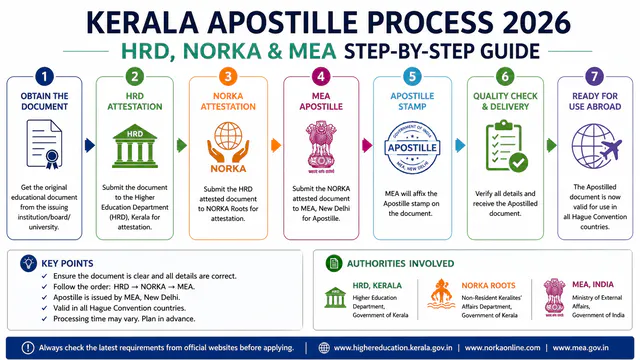
Step 1 — University / KUHS Verification
Your BSc in Nursing or GNM degree must first be verified by the issuing institution—either your nursing college's examination section or KUHS (Kerala University of Health Sciences), depending on which body issued the certificate.
This confirms the degree is genuine and on record with the institution.
Timeline: 1–4 weeks, depending on university backlog (KUHS examination periods can extend this)
Step 2 — State HRD Authentication via NORKA ROOTS
Educational documents from Kerala go through NORKA ROOTS for state HRD authentication. NORKA ROOTS is the officially designated HRD authority for Kerala-issued educational certificates and is authorized by the MEA to submit documents to the Trivandrum RPO.
What NORKA ROOTS does: Verifies and stamps your nursing degree with the state HRD authentication signature (Joint Secretary, Government of Kerala).
Documents needed at NORKA ROOTS:
- Original nursing degree certificate (with university verification)
- Original marksheets for all years
- All lower qualification certificates with marksheets
- Photocopy of passport (first page, address page, validity page)
- Passport photograph
- Completed NORKA application form (norkaroots.kerala.gov.in)
- Marriage certificate copy if passport shows spouse's name
Three NORKA ROOTS centers in Kerala:
- Thiruvananthapuram
- Ernakulam
- Kozhikode
Attendance requirement: The candidate or a blood relative must be present in person at the time of authentication.
Timeline: 3–7 working days
Step 3 — MEA Apostille via Trivandrum RPO
After NORKA ROOTS authentication, documents are submitted to MEA through an authorised professional agency. For Kerala, MEA processing happens at the Trivandrum Regional Passport Office—one of only five decentralized MEA apostille centers in India. Documents do not need to travel to New Delhi.
MEA affixes the apostille sticker on the reverse of your original document. The sticker contains:
- Unique identification number
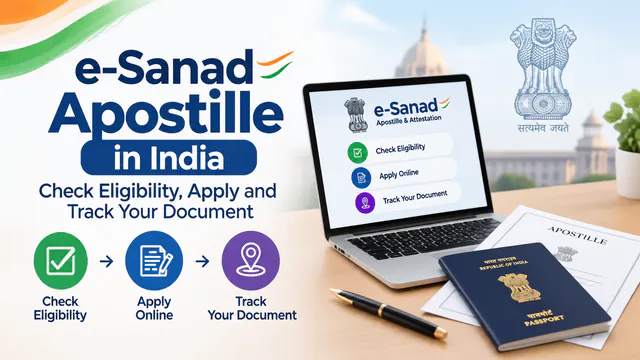
- QR code verifiable at esanad.nic.in
- MEA official seal
- Date of issue
Timeline: 5–7 working days
This is the final India-side step. After the MEA Apostille, your original document is an internationally recognised Indian document—accepted in Australia without any additional steps in India.
Step 4 — Get Certified Copies Made
After receiving your apostilled originals from the professional agency, take them to a notary public. The notary sights each original, certifies a photocopy of the complete document (including the Apostille sticker on the reverse), and writes the required AHPRA certification statement.
Each certified copy must include:
- The certifier's full signature and initials on every page
- Date of certification
- Contact phone number and professional title
- Statement: "I have sighted the original document and certify this to be a true copy."
Keep your apostilled originals safely stored. Only the certified copies go to AHPRA.
Step 5 — Submit to AHPRA
Complete your AHPRA IQNM registration application online through the AHPRA practitioner portal. Attach your certified copies, IELTS/OET scores, Fit2Work reference, and all other required documents. Submit your KNC Good Standing Certificate (within its 3-month validity window).
For the complete AHPRA registration steps and ANMAC assessment, visit the official AHPRA international practitioners page at ahpra.gov.au/Registration/International-practitioners.aspx.
Complete Timeline Overview
Stage | Estimated time |
University / KUHS verification | 1–4 weeks |
NORKA ROOTS HRD authentication | 3–7 working days |
MEA Apostille (Trivandrum RPO) | 5–7 working days |
Certified copies made | 1–2 days |
KNC Good Standing (timed for 3-month window) | 1–3 weeks |
AHPRA initial review | Within 30 days |
AHPRA full assessment | 4–6 weeks (post-complete application) |
Total India-side document process | 4–8 weeks with a professional agency |
9. AHPRA Processing Timelines — What to Realistically Expect
Understanding AHPRA's processing timelines is essential for planning your Australia move realistically.
Quotable fact: According to AHPRA's official guidance for international practitioners: "The initial review will happen within 30 days — we'll contact you if anything is missing. The full assessment can take up to 6 weeks. Most are done in 4–5 weeks." AHPRA also states: "You should apply at least three months before your intended start date. We can accept applications as early as six months before your intended start date."
AHPRA peak periods: AHPRA processes significantly more applications during certain periods. October through February is historically a longer processing period. If your target Australia start date falls between October and February, allow additional time in your timeline and ensure your application is submitted well before October.
What causes delays in AHPRA processing?
- Incomplete document set — any missing certified copy triggers a request for more information, adding time
- English language scores not meeting the band requirement—a 6.5 in one band fails even if the overall IELTS score is 7.5
- Expired Good Standing Certificate — if it expires before your application is assessed, AHPRA will request a new one
- Documents not certified according to AHPRA specifications — incorrect certification statement, missing contact details, initials not on every page
- Criminal history issues—any flag in the Fit2Work international check requires additional time for assessment
Realistic total timeline from "starting documents" to "AHPRA registration in hand":
For a BSc nursing graduate with all documents in order and English scores already met: approximately 4–6 months from starting the apostille process.
For a nurse who needs to complete IELTS/OET simultaneously: 6–12 months total, depending on test availability and score achievement.
10. English Language Requirements — Why This Must Run Alongside Apostille
This section is not about document attestation, but it belongs in every honest guide for Kerala nurses going to Australia because it is the single most common cause of the overall AHPRA journey taking far longer than the document process alone.
The requirement (2025–2026, no exemptions):
IELTS: 7.0 in every individual band — speaking, reading, writing, and listening. An overall score of 7.0 with any individual band below 7.0 does not meet the standard. A score of 8.0 overall, with 6.5 in writing, fails.
OET: Grade B in all four sections. OET is specifically designed for healthcare professionals, and many nurses find the clinically focused writing tasks more manageable than IELTS academic writing.
Quotable fact: According to Gemini Education & Migration's 2026 guide for Indian nurses, "AHPRA requires either IELTS 7.0 in every individual band or OET Grade B in all sections. These requirements have been in place since 2025 with no exemptions—not for extensive English-medium education, not for previous Australian work experience, and not for any other reason. This is consistently the most common cause of delay for Indian and Sri Lankan nurses."
Why this matters for the document timeline: English proficiency testing takes time — sometimes multiple attempts. If a nurse starts the apostille process, completes all documents, has everything ready, and then discovers she needs another OET attempt, the 4-month document-ready period can become a 6-month or 12-month wait.
The correct approach: Start IELTS/OET preparation at the same time as the apostille document process — not after. The two tracks run in parallel. OET preparation requires study, the test booking (which may have wait times), and potentially re-sits. Do not let the document process finish first and then wait for language scores.
Trueway International's OET coaching service supports Kerala nurses in language preparation alongside the apostille process—coordinated as a single migration preparation journey.
11. Kerala-Specific: NORKA ROOTS, Trivandrum RPO, and the Local Advantage
For Kerala nurses, every stage of the India-side apostille process has a local advantage that national guides miss entirely.
NORKA ROOTS — Kerala's exclusive HRD channel: NORKA ROOTS is the designated HRD authentication authority for Kerala-issued educational certificates. It is not optional — it is the correct state-level authority for educational documents from Kerala. Other state HRD departments cannot authenticate Kerala-issued nursing degrees. NORKA's three centers across Kerala (Trivandrum, Ernakulam, and Kozhikode) mean that regardless of where in Kerala you are, there is a NORKA center accessible to you.
The Trivandrum RPO—MEA without New Delhi: Since October 2016, MEA apostilles for Kerala documents have been processed at the Trivandrum Regional Passport Office—one of five decentralized MEA centers in India. This means:
- No courier to New Delhi
- Documents remain in South India throughout
- Local professional agency coordination through established channels
- Reduced transit risk and transit time
Trueway International's operational advantage: Trueway International's branches in Trivandrum and Attingal process documents through the NORKA ROOTS → Trivandrum RPO channel directly. We know the NORKA appointment system, the KUHS verification timelines, the Trivandrum RPO processing speed, and the specific requirements at each step that national agencies based in Delhi simply cannot match from a distance.
The result: the India-side document process for a Kerala nurse going to Australia is managed faster and more reliably through a local Kerala agency than through any national or Delhi-based service.
12. GNM Nurses — Your Pathway and Your Documents
If you hold a GNM (General Nursing and Midwifery) diploma from a Kerala institution, your AHPRA pathway is different from BSc Nursing graduates — but it is important to understand this before starting the document process, because the documents you prepare and apostille may differ.
What AHPRA typically does with GNM qualifications: AHPRA typically classifies GNM as Outcome 4, meaning the qualification is not considered substantially equivalent to the Australian Registered Nurse standard. This does not mean Australia is closed to you. It means the pathway involves additional steps.
Common GNM pathways:
- Bridging program: Complete specific academic units at an Australian university to bridge the qualification gap, then apply for Registered Nurse registration.
- Enrolled Nurse pathway: Enroll in an Australian Diploma of Nursing (approximately 18 months), qualify as an Enrolled Nurse, work in Australia, and optionally pursue a Bachelor's degree to top up to Registered Nurse status.
Documents GNM nurses should apostille: The apostille requirements are the same as for BSc Nursing — your GNM diploma certificate, all year marksheets, nursing registration certificate, experience letters, and PCC all need MEA Apostille via the same NORKA → Trivandrum RPO process.
What changes is not the apostille process — it is the AHPRA assessment outcome and the subsequent pathway. Having your documents apostilled and ready means you can move forward with whichever pathway AHPRA directs you to without document delays.
Trueway International advises GNM nurses on which specific documents to prioritize and in what order, based on the likely AHPRA pathway outcome, so that document preparation is efficient rather than exhaustive.
13. Already in Australia? Getting Remaining Indian Documents from There
Some nurses begin the AHPRA process after arriving in Australia on another visa—a student visa or a working holiday visa—or after completing an Australian nursing qualification. If you are already in Australia and need additional Indian documents apostilled, the process runs from India — not from Australia.
What you can do from Australia:
Authorize Trueway International through a notarized Power of Attorney (POA) to collect documents in Kerala, manage NORKA authentication, obtain MEA Apostille at Trivandrum RPO, and courier the apostilled originals to your Australian address.
The certified copies for AHPRA submission are then made in Australia—either by a notary public or justice of the peace (JP) in Australia, who follows AHPRA's certification requirements.
Important: Documents that need an apostille must be physically present in India at some point for the apostille process. If your original degree is in Australia with you, it needs to be couriered to India for apostille, apostilled there, and then sent back to you. Trueway International coordinates this securely.
14. Why the Document Step Still Needs Professional Management
The Australia apostille process for AHPRA is technically simpler than the UAE attestation chain. But "simpler" does not mean error-free — and for a Kerala nurse whose entire Australian journey depends on this step going correctly, the cost of an error is months, not days.
Getting the originals vs. copies protocol wrong means losing your apostilled degree to AHPRA permanently. Timing the KNC Good Standing incorrectly means reapplying with an expired certificate. Getting the NORKA appointment wrong means resubmission. Choosing the wrong marksheet set — partial transcripts instead of complete — means AHPRA requests missing documents, and the clock resets.
These are not hypothetical risks. They are the most common, most repeated mistakes in this specific process.
The government apostille process itself — NORKA, MEA Trivandrum RPO — is well-designed and reliable. The issue is that each authority has specific requirements, specific submission formats, and specific timelines that interact with each other and with AHPRA's own requirements.
A professional agency does not just handle the submission. It knows what each authority needs before it is submitted. It checks your documents against the specific AHPRA-certified copy requirement before anything moves. It coordinates NORKA timing with your Australia plan. It tracks your application and follows up immediately when a query arises.
For a Kerala nurse whose Australia journey has been years in the making, that kind of management is not additional overhead. It is the difference between arriving in Australia with registration confirmed and arriving and waiting.
Contact Trueway International at +91 8327 626262. One conversation confirms your pathway, your document list, and the timeline—before you spend time or money in the wrong direction.
15. Frequently Asked Questions
Yes. Australia has been a Hague Convention member since 1 November 1973, and India since 26 October 2005. Indian documents apostilled by MEA are legally recognized in Australia under the Hague Convention bilateral agreement. No Australian High Commission stamp is required in India. The MEA Apostille is the complete India-side authentication for AHPRA purposes.
16. Quick Reference — AHPRA Document Map
Document | An apostille is needed | Validity concern | AHPRA submission format |
BSc Nursing / GNM Degree | Yes | None | Certified copy of apostilled original |
Marksheets — all years | Yes | None | Certified copies of apostilled originals |
KNC Registration Certificate | Yes | None | Certified copy of apostilled original |
KNC Good Standing Certificate | Not standard apostille | 3 months — CRITICAL | As per AHPRA verification |
Hospital experience letters | Yes | None | Certified copies |
PCC (India Police Clearance) | Yes | None | Certified copy of apostilled original |
Passport | No | None | Certified copy |
IELTS / OET score report | No | 3 years (confirm with AHPRA) | From the test body / certified copy |
ANMAC assessment outcome | No | 3 years | Original letter / online |
Fit2Work criminal check | No | 3 months — CRITICAL | Fit2Work reference number |
CV / Resume | No | N/A | AHPRA CV template, signed |
17. How Trueway International Supports the Complete AHPRA Journey
For a Kerala nurse planning to register with AHPRA and work in Australia, the document step is the foundation for everything else. Get it right—apostilled originals safely kept, certified copies correctly prepared, KNC Good Standing timed properly, and all documents ready before the AHPRA application is lodged—and the AHPRA process runs at the pace AHPRA sets. Get it wrong — and that pace is set back by months.
Trueway International's support covers both the attestation side and the verification side:
Attestation—Our Apostille Attestation service handles the complete India-side document process:
- University / KUHS verification coordination
- NORKA ROOTS HRD authentication at Trivandrum, Ernakulam, or Kozhikode centre
- MEA Apostille via Trivandrum RPO
- Document preparation for AHPRA certified copy requirements
- NRI Power of Attorney service for nurses already in Australia
- KNC Good Standing Certificate coordination (timed to the 3-month window)
- PCC coordination alongside a degree apostille
AHPRA Verification — our AHPRA verification service goes further:
- ANMAC assessment document preparation and submission support
- AHPRA registration application support
- Qualification assessment pathway guidance (BSc vs GNM pathway planning)
- Council verification services for KNC and other Indian nursing bodies
- Document evaluation before submission to avoid AHPRA rejections
OET/IELTS coaching — through Trueway International's coaching services, language preparation runs alongside the document process rather than after it.
Trueway International has guided hundreds of Kerala nurses through the complete AHPRA journey. Our Trivandrum and Attingal branches mean local expertise in the NORKA channel, the Trivandrum RPO, and the Kerala-specific document ecosystem that no Delhi-headquartered national service can replicate.
First step: WhatsApp us your qualification type (BSc Nursing or GNM), your Australia timeline, and whether you are in Kerala or already abroad. We confirm the exact document process, timing, and what runs in parallel—in one conversation, before anything starts.
Summary — Australia Apostille for AHPRA: Key Facts
Question | Answer |
Does Australia accept MEA Apostille? | Yes — Hague member since 1 Nov 1973 |
India-Australia Apostille legal basis | HCCH bilateral — both Hague members |
Hague sources | hcch.net |
Do you send apostilled originals to AHPRA? | No — certified copies only; originals never returned |
KNC Good Standing validity | 3–6 months — time it carefully |
Which documents need an apostille? | Degree, marksheets, KNC registration, experience letters, PCC |
Kerala HRD authority | NORKA ROOTS (Trivandrum / Ernakulam / Kozhikode) |
MEA processing centre for Kerala | Trivandrum RPO |
English requirement | IELTS 7.0 each band OR OET Grade B all sections; no exemptions |
GNM pathway | AHPRA typically, Outcome 4: bridging program likely |
AHPRA full assessment time | 4–6 weeks post complete application |
AHPRA peak period | October–February — allow extra time |
Best time to apply | At least 3 months before the intended start date |
Published by Trueway International. All AHPRA process information is sourced from the official AHPRA website (ahpra.gov.au ), HCCH official records (hcch.net ), and ANMAC (anmac.org.au ), verified as of May 2026. AHPRA registration requirements, pathways, and processing times change regularly. Always confirm current requirements at ahpra.gov.au before starting your application. This guide provides document-process guidance only and is not a substitute for MARA-registered migration advice for visa and residency matters.